Peptides for Research
Aegis Peptides supplies premium peptides for research, supporting UK-based laboratory buyers with high-purity compounds for advanced scientific study. Our range is intended strictly for laboratory research use only and is not supplied for human consumption, clinical use, veterinary use, cosmetic use, food use or therapeutic use.
As interest in peptide science continues to grow, researchers are exploring how different peptide compounds interact with metabolic pathways, cellular repair processes, inflammatory signalling, mitochondrial function and receptor activity. Aegis Peptides provides research-focused buyers with 99% purity, fast, free UK delivery, clear product information and third-party testing certification for quality assurance.
What Are Peptides for Research?
Peptides for research are short chains of amino acids used in laboratory settings to study biological signalling, receptor pathways and cellular processes. Some peptides are investigated in metabolic research, while others are explored in tissue repair, skin biology, mitochondrial studies or growth hormone signalling.
It is important to understand that research peptides are not consumer supplements or medicines. They should only be handled by qualified professionals in appropriate research environments.
Popular Peptides Currently Used in Research
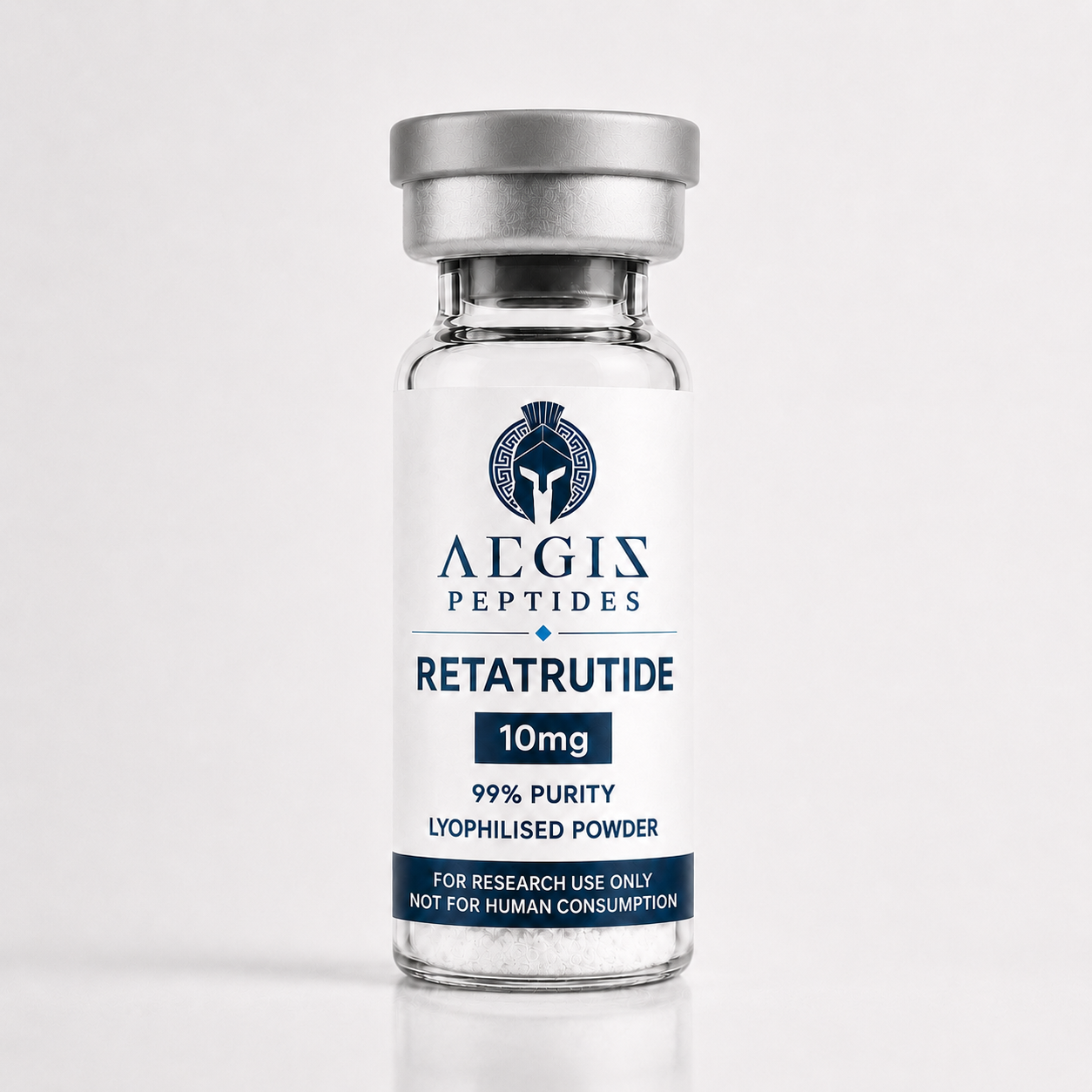
Retatrutide
Retatrutide is an investigational triple receptor agonist studied across GLP-1, GIP and glucagon receptor pathways. In a phase 2 obesity trial, Retatrutide produced mean body-weight reductions of up to 24.2% at 48 weeks in the 12 mg group, compared with 2.1% for placebo.
Research interest: metabolic signalling, appetite-related pathways, glucose regulation and energy balance.
Reported side effects in studies: nausea, diarrhoea, vomiting, constipation, gastrointestinal discomfort and dose-related heart-rate increases. Some research discussions also mention acid reflux, indigestion and altered skin sensation.
If you'd like to read more about the Phase 2 trials of Retatrutide, click here.
Tirzepatide
Tirzepatide is a dual GIP and GLP-1 receptor agonist. In the SURMOUNT-1 trial, average weight reductions included 19.5% with 10 mg and 20.9% with 15 mg, compared with 3.1% for placebo using the treatment-regimen estimand.
Research interest: incretin pathways, metabolic regulation, glucose response and body-weight research.
Reported side effects in studies: nausea, diarrhoea, constipation, vomiting and other gastrointestinal symptoms, most often during dose escalation. Treatment discontinuation due to adverse events was also reported in trial groups.
If you'd like to read more about Tirzepatide, click here.
Semaglutide
Semaglutide is a GLP-1 receptor agonist widely studied in metabolic and weight-management research. In the STEP 1 trial, Semaglutide 2.4 mg was studied in adults with overweight or obesity, with nausea and diarrhoea reported as the most common adverse events.
Research interest: GLP-1 receptor activity, glucose regulation, appetite signalling and metabolic outcomes.
Reported side effects in studies: nausea, diarrhoea, vomiting, constipation, abdominal discomfort and gastrointestinal-related discontinuation in some participants.
If you'd like to read more about Semaglutide, click here.
GHK-Cu
GHK-Cu is a copper-binding peptide studied in relation to skin biology, tissue repair, inflammation and wound-healing processes. Research reviews describe GHK-Cu as being associated with wound healing, skin remodelling and anti-inflammatory activity in experimental settings.
Research interest: tissue repair, skin ageing research, collagen-related pathways, inflammation and wound-healing models.
Potential side effects or limitations: human safety data is more limited than for licensed medicines. Research discussions may include irritation, sensitivity or local reaction depending on formulation and study context.
For further reading on GHK-Cu, click here.
BPC-157
BPC-157 is a synthetic peptide studied mainly in preclinical models relating to tissue repair, tendon healing, inflammation and musculoskeletal research. A 2025 review noted growing interest but also highlighted the need for stronger clinical evidence and safety assessment.
Research interest: tendon models, wound-healing pathways, inflammatory response and tissue repair mechanisms.
Side effects and safety context: large-scale human safety data remains limited. One small human pilot involving two healthy adults reported that intravenous BPC-157 up to 20 mg was well tolerated, but the authors stated that future studies are needed.
For more information about BPC-157, click here.
TB-500 / Thymosin Beta-4
Thymosin beta-4 (TB-500) is studied for its role in tissue repair, cell migration and wound-healing pathways. In a rat wound model, thymosin beta-4 increased re-epithelialisation by 42% at 4 days and up to 61% at 7 days compared with saline controls.
Research interest: wound repair, angiogenesis, tissue regeneration and cellular migration.
Potential side effects or limitations: much of the research is preclinical or specialised. Safety and side-effect profiles depend heavily on study type, compound quality and research conditions.
To read more about Thmosin Beta-4, click here.
MOTS-c
MOTS-c is a mitochondrial-derived peptide studied in relation to metabolic stress, insulin sensitivity, cellular energy balance and ageing-related research. Published research describes MOTS-c as a 16-amino-acid mitochondrial peptide involved in metabolic homeostasis.
Research interest: mitochondrial function, metabolic regulation, insulin sensitivity, ageing biology and cellular stress response.
Potential side effects or limitations: human evidence is still developing, and long-term safety data remains limited. It should not be treated as a consumer wellness or performance product.
For more information on MOTS-c, click here.
CJC-1295 and Ipamorelin
CJC-1295 and Ipamorelin are studied in relation to growth hormone signalling. CJC-1295 research in healthy adults found sustained, dose-dependent increases in growth hormone and IGF-1, with no serious adverse reactions reported in that study.
Research interest: growth hormone pathways, IGF-1 signalling, endocrine research and metabolic studies.
Reported or potential side effects: flushing, headache, water retention, tingling, changes in glucose tolerance, raised IGF-1 and injection-site reactions are commonly discussed in safety summaries, although study quality varies.
For further information about CJC-1295 & Ipamorelin, click here.
Benefits of Peptides for Research
Peptides for research are valuable because they allow scientists to study highly specific biological pathways. Depending on the peptide, research may focus on receptor activity, metabolic signalling, tissue repair, inflammation, mitochondrial function, cellular ageing or endocrine response.
For laboratories and research-focused buyers, the key benefits include:
- Targeted biological pathway study
- Metabolic and receptor research applications
- Tissue repair and wound-healing models
- Mitochondrial and cellular energy research
- Clear comparison between single, dual and triple receptor compounds
- Support for controlled laboratory investigation
Side Effects and Safety Considerations
Side-effect data varies significantly between peptides. Compounds such as Semaglutide, Tirzepatide and Retatrutide have more clinical trial data, where gastrointestinal effects are commonly reported. Other peptides, including BPC-157, TB-500, MOTS-c and GHK-Cu, may have more limited human data, with much of the available evidence coming from preclinical or early-stage research.
Researchers should consider:
- Purity and testing documentation
- Certificate of Analysis availability
- Batch traceability
- Storage requirements
- Study design and compound handling
- Known and unknown safety limitations
- The difference between preclinical and human data
Why Choose Aegis Peptides?
Aegis Peptides supplies high-quality peptides for research across the UK. Our products are manufactured to high standards, with 99% purity, third-party testing and certification to support responsible research use.
We offer:
- 99% purity
- Fast, free UK delivery
- Pharmaceutical-grade peptides for advanced research applications
- Full third-party testing and certification
- Clear research-only product information
- UK-based supply and support
Final Thoughts
Peptides for research are an important part of modern scientific investigation, with different compounds being studied across metabolic, regenerative, mitochondrial and cellular pathways. From Retatrutide, Tirzepatide and Semaglutide to GHK-Cu, BPC-157, TB-500, MOTS-c and CJC-1295, each peptide has a distinct research profile, evidence base and safety context.
Aegis Peptides supplies research peptides strictly for laboratory research use only, helping UK buyers access high-purity, third-party tested products with fast, free UK delivery.