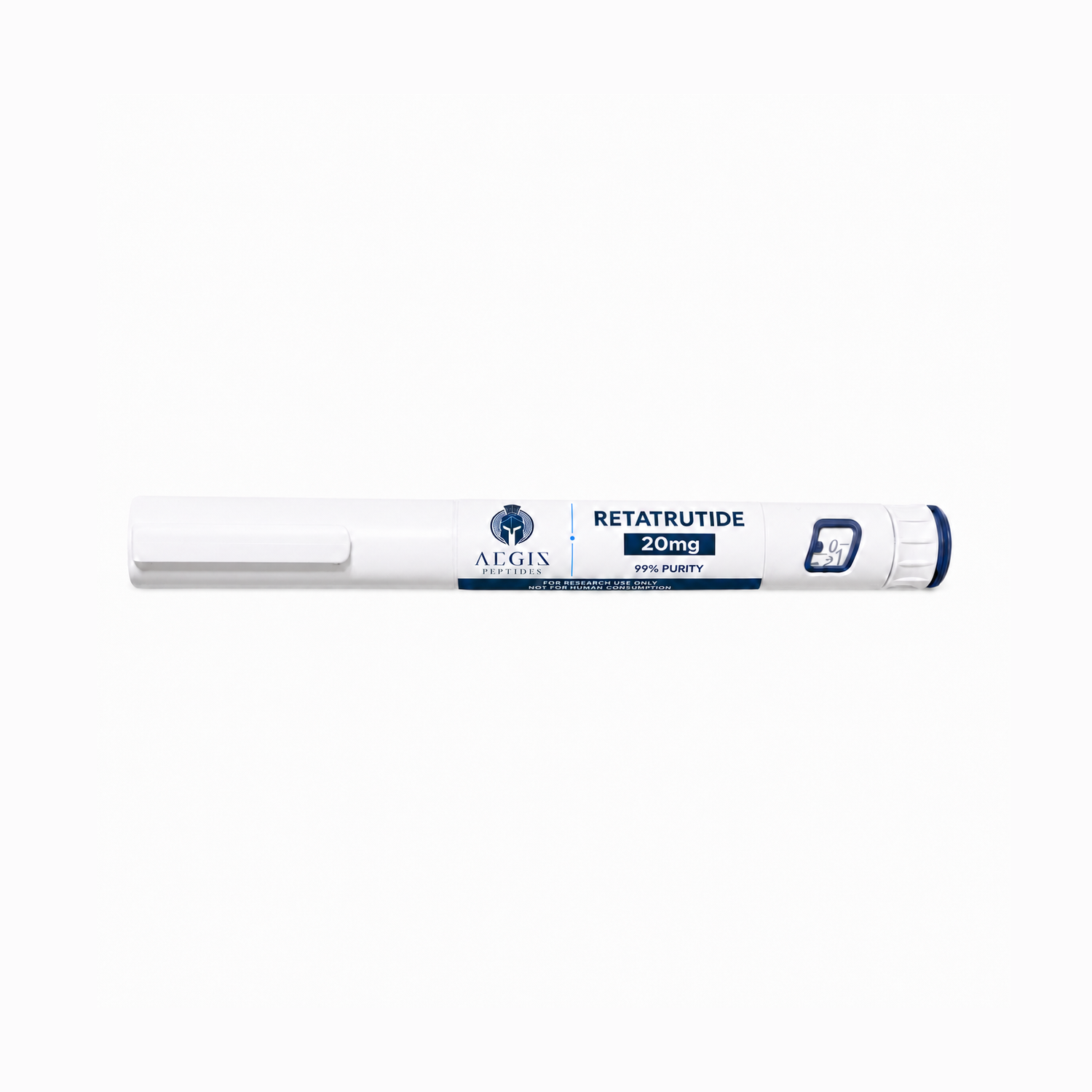
Retatatrutide vs Semaglutide
Retatatrutide vs Semaglutide is a growing search topic among people looking to understand the differences between two widely discussed peptide-based compounds. Both are connected to metabolic and pharmaceutical research, but they are not the same. Semaglutide is an established GLP-1 receptor agonist used in licensed medicines, while Retatrutide is an investigational compound studied for activity across GLP-1, GIP and glucagon receptor pathways.
Aegis Peptides is a UK supplier of research peptides. Our products are supplied strictly for laboratory research use only and are not intended for human consumption, clinical use, veterinary use, food use, cosmetic use or therapeutic use. This page is for educational and research-focused information only. It is not medical advice, dosage guidance or a recommendation for personal use.
What Is Retatrutide?
Retatrutide is an investigational peptide-based compound studied in metabolic and pharmaceutical research. It is often described as a triple receptor agonist because it interacts with GLP-1, GIP and glucagon receptor pathways.
These pathways are of interest in research because they are connected to appetite signalling, glucose regulation, energy balance and wider metabolic function. However, Retatrutide remains an investigational compound and should not be confused with a licensed consumer medicine.
At Aegis Peptides, Retatrutide is supplied strictly for laboratory research use only.
What Is Semaglutide?
Semaglutide is a GLP-1 receptor agonist. It is the active ingredient in licensed medicines used in specific clinical settings, including type 2 diabetes and weight-management treatment where prescribed by a qualified healthcare professional.
Unlike Retatrutide, which is mainly discussed as an investigational triple receptor compound, Semaglutide has an established clinical and regulatory background. This makes Semaglutide a more widely recognised compound in medical and pharmaceutical discussions.
Research-only peptide suppliers should not present Semaglutide, Retatrutide or related compounds as personal-use products, slimming aids or alternatives to prescribed medicines.
Retatatrutide vs Semaglutide: Main Difference
The main difference between Retatatrutide vs Semaglutide is receptor activity.
Semaglutide primarily targets the GLP-1 receptor pathway. Retatrutide is studied for activity across three receptor pathways: GLP-1, GIP and glucagon.
This difference is important in research because receptor activity can influence how a compound is investigated, how it is compared in clinical research, and how its potential effects and side-effect profile are monitored.
Receptor Pathway Comparison
Semaglutide and GLP-1
Semaglutide is associated with the GLP-1 receptor pathway. GLP-1 is involved in metabolic signalling, glucose regulation and appetite-related research. Because Semaglutide acts on this pathway, it has become one of the best-known peptide-based compounds in modern metabolic medicine.
Retatrutide and Triple Receptor Research
Retatrutide is studied across three receptor pathways:
- GLP-1 receptor pathway
- GIP receptor pathway
- Glucagon receptor pathway
This triple receptor activity is one reason Retatrutide has attracted significant research attention. Scientists are interested in how multi-receptor compounds may differ from single-pathway or dual-pathway compounds in controlled research settings.
Retatatrutide vs Semaglutide in Research
When comparing Retatatrutide vs Semaglutide, it is important to separate scientific research from personal-use claims. Research data is gathered under controlled conditions, with participant screening, professional oversight and structured adverse event monitoring.
Research Status
Semaglutide has already been developed into licensed medicines in certain countries and clinical settings. Retatrutide is still widely discussed as an investigational compound within ongoing pharmaceutical research.
Mechanism of Interest
Semaglutide is mainly associated with GLP-1 receptor activity. Retatrutide is associated with GLP-1, GIP and glucagon receptor activity.
Safety Monitoring
Both compounds are discussed in relation to gastrointestinal effects in research and clinical contexts. However, safety data must be interpreted carefully because study design, dosage, participant group, compound structure and treatment duration can all influence results.
Side Effects: Retatatrutide vs Semaglutide
Side-effect comparisons should always be treated with caution. Retatrutide and Semaglutide are different compounds, and research findings should not be used as personal-use guidance.
Retatrutide Side Effects Discussed in Research
Retatrutide studies have commonly reported gastrointestinal adverse events. These may include nausea, diarrhoea, vomiting, constipation, acid reflux, indigestion and abdominal discomfort. Some research discussions have also mentioned heart-rate changes and sensory symptoms such as skin sensitivity or altered skin sensation.
Semaglutide Side Effects Discussed in Clinical Contexts
Semaglutide is also commonly associated with gastrointestinal side effects in clinical and prescribing information. These may include nausea, vomiting, diarrhoea, constipation and abdominal discomfort.
Anyone experiencing symptoms or considering a prescribed treatment should speak to a qualified healthcare professional. Aegis Peptides does not provide medical advice.
Is Retatrutide Stronger Than Semaglutide?
Many people searching for Retatatrutide vs Semaglutide want to know whether one is “stronger” than the other. This is not a simple or responsible comparison.
Retatrutide and Semaglutide have different receptor profiles, different development statuses and different research backgrounds. A compound being studied across more receptor pathways does not automatically mean it is better, safer or suitable for personal use.
Scientific comparisons should be based on controlled research, not online claims, anecdotal reports or consumer marketing.
Why Research-Only Positioning Matters
Peptide-related search terms are often linked online with weight loss, body transformation, recovery or anti-ageing claims. For a responsible UK peptide supplier, clear research-only positioning is essential.
Aegis Peptides supplies research peptides strictly for laboratory research. Our products are not supplied for:
- Human consumption
- Self-administration
- Weight-loss use
- Clinical treatment
- Veterinary use
- Cosmetic use
- Food or supplement use
- Therapeutic use
We do not provide dosage guidance, injection instructions, treatment advice or personal-use recommendations.
Buying Research Peptides Responsibly
If you are comparing Retatatrutide vs Semaglutide from a research supply perspective, the supplier you choose matters. A professional research peptide supplier should provide clear product information, transparent wording and responsible disclaimers.
What to Look For
- Research-only wording
- Clear product names
- Purity information where available
- Certificate of Analysis availability
- Batch traceability
- Storage guidance
- Clear contact information
- No medical claims
- No dosage advice
- No personal-use instructions
These details help research buyers assess products responsibly and avoid suppliers that blur the line between laboratory research and consumer use.
Why Choose Aegis Peptides?
Aegis Peptides is a UK-based supplier of research peptides, supporting research-focused buyers with clear information, responsible wording and free UK delivery.
UK Research Peptide Supplier
Aegis Peptides provides a domestic option for UK research buyers looking for a straightforward and professional ordering experience.
Research-Only Products
All products are supplied strictly for laboratory research use only. They are not intended for human consumption, clinical use, veterinary use, food use, cosmetic use or therapeutic use.
Clear Product Information
We aim to make product details easy to review, helping research buyers assess product names, amounts, purity information, storage guidance and documentation where available.
Free UK Delivery
Aegis Peptides offers free UK delivery, helping UK buyers order research peptides without additional UK delivery costs at checkout.
Frequently Asked Questions About Retatatrutide vs Semaglutide
What is the main difference between Retatatrutide and Semaglutide?
The main difference is receptor activity. Semaglutide primarily acts on the GLP-1 receptor pathway, while Retatrutide is studied for activity across GLP-1, GIP and glucagon receptor pathways.
Is Retatrutide the same as Semaglutide?
No. Retatrutide and Semaglutide are different compounds with different receptor profiles and research backgrounds.
Is Retatrutide approved for personal use?
Aegis Peptides does not provide medical or regulatory advice. Retatrutide is widely discussed as an investigational compound and research peptides supplied by Aegis Peptides are strictly for laboratory research use only.
Can Aegis Peptides provide dosage guidance?
No. Aegis Peptides does not provide dosage guidance, administration advice, injection instructions or personal-use recommendations.
Are Retatrutide and Semaglutide used in weight research?
Both compounds are discussed in metabolic and pharmaceutical research contexts. However, research discussion should not be treated as personal-use guidance or a consumer health claim.
Can I use research peptides personally?
No. Research peptides from Aegis Peptides are not intended for human consumption, self-administration, clinical use, veterinary use, food use, cosmetic use or therapeutic use.
Final Thoughts
Retatatrutide vs Semaglutide is an important comparison in modern metabolic and peptide research. Semaglutide is primarily associated with GLP-1 receptor activity and has an established clinical background. Retatrutide is an investigational compound studied for activity across GLP-1, GIP and glucagon receptor pathways.
For research buyers, the key point is responsible sourcing. Aegis Peptides supplies research peptides for laboratory use only, with clear information, free UK delivery and a responsible approach to peptide supply.
This page is for educational and research-focused information only. It is not medical advice and should not be used to guide personal use.