Retatrutide Side Effects: Research Context, Study Findings and Safety Considerations
Retatrutide side effects are an important topic for researchers, laboratories and procurement buyers reviewing published study data, investigational peptide research and related GLP-1, GIP and glucagon pathway activity. Retatrutide is currently discussed in scientific and clinical research because it is studied in relation to three receptor pathways: GLP-1, GIP and glucagon.
This page provides a research-focused overview of reported Retatrutide side effects, wider GLP-1 class safety discussions and relevant product-format information from Aegis Peptides. It is written for educational and research context only.
Aegis Peptides supplies Retatrutide products strictly for laboratory and scientific research purposes only. Retatrutide products from Aegis Peptides are not intended for human consumption, veterinary use, self-administration, clinical use, treatment, diagnosis, prevention, cosmetic use, supplement use, body composition use, wellness use, weight-loss use or any form of personal use.
What Is Retatrutide?
Retatrutide is an investigational peptide-based compound studied in relation to GLP-1, GIP and glucagon receptor pathways. This triple pathway interest has made Retatrutide a widely discussed subject in research involving metabolic signalling, receptor interaction, glucose response models, appetite-related signalling, energy balance and cardiometabolic research.
For a broader introduction, researchers can read What is Retatrutide?. Those reviewing receptor pathway activity may also find How Does Retatrutide Work? useful.
Why Are Retatrutide Side Effects Being Researched?
Retatrutide side effects are being studied because the compound is still investigational and long-term safety data continues to develop. In published and reported study settings, adverse events have most commonly involved gastrointestinal symptoms, which is also a common area of interest across incretin-related research.
Research into side effects helps scientists, clinicians and regulatory bodies understand tolerability, dose-related trends, discontinuation rates and areas requiring further study. This page does not provide medical advice or personal-use guidance.
Reported Retatrutide Side Effects in Research
The most commonly discussed Retatrutide side effects in study reporting are gastrointestinal. These are often described as dose-related, meaning higher studied doses may be associated with higher rates of reported adverse events.
| Reported Side Effect | Research Context |
|---|---|
| Nausea | Frequently reported gastrointestinal adverse event in Retatrutide study discussion |
| Diarrhoea | Commonly reported in clinical research and later-stage reporting |
| Vomiting | Reported in study settings, often discussed as part of tolerability |
| Constipation | Reported in incretin-related research and Retatrutide study discussion |
| Abdominal discomfort | Included within gastrointestinal tolerability discussions |
| Indigestion or reflux-type symptoms | Sometimes grouped within upper gastrointestinal complaints |
| Reduced appetite | Reported in clinical research context, not a product-use claim |
| Increased heart rate | Discussed in some Retatrutide research and safety analysis |
| Dysesthesia or altered skin sensation | Reported in some Retatrutide trial discussion and wider analysis |
| Fatigue or headache | Less commonly discussed in some summaries of Retatrutide tolerability |
| Menstrual cycle changes | Not established as a Retatrutide-specific trial-reported side effect, but reproductive symptoms have been discussed as wider self-reported GLP-1 class signals |
This table is provided for research context only. It should not be used to diagnose symptoms, assess personal risk, guide dosing, guide administration or support personal use.
Gastrointestinal Side Effects
Gastrointestinal side effects are the most frequently discussed adverse events in Retatrutide research. These may include nausea, diarrhoea, vomiting, constipation, indigestion, reflux-type symptoms and abdominal discomfort.
This pattern is relevant because Retatrutide is studied within the wider incretin and metabolic research category. Researchers reviewing GLP-1, GIP and glucagon pathway compounds often pay close attention to gastrointestinal tolerability because it can affect study continuation, dose escalation design and participant experience in controlled clinical settings.
Aegis Peptides does not provide clinical guidance, treatment advice or side effect management advice.
Are Retatrutide Side Effects Dose-Related?
Retatrutide side effects are often discussed as dose-related in study reporting, particularly gastrointestinal effects. In simple terms, this means that some adverse events may appear more often or more noticeably at higher studied dose levels in clinical research environments.
This is relevant for study design and safety monitoring, but it should not be interpreted as dosing guidance. Aegis Peptides does not provide dosage information, preparation instructions, administration guidance, injection guidance or personal-use advice.
Menstrual Cycle Changes and GLP-1 Class Discussion
Some online user reports and wider GLP-1 class discussions mention reproductive or menstrual changes, including changes to cycle timing, flow, duration, regularity, missed periods, spotting, heavier bleeding or lighter bleeding.
At present, these should be treated carefully. Menstrual cycle changes are not well established as a Retatrutide-specific side effect in published Retatrutide trial reporting. However, wider GLP-1 user discussions and social media research have identified reproductive symptoms, including menstrual irregularities, as emerging signals that may require further study.
Possible reasons this topic attracts attention include changes in body weight, nutrition, stress, energy balance, hormonal signalling, medication changes and underlying health conditions. These factors can all influence menstrual patterns and make it difficult to assign causation without controlled research.
Anyone experiencing menstrual changes, unusual bleeding, missed periods, pregnancy concerns or reproductive health symptoms should speak to a qualified healthcare professional. This page is not medical advice.
Retatrutide Side Effects vs Wider GLP-1 Research
Retatrutide is often compared with other incretin-related research areas because of its relationship with GLP-1, GIP and glucagon receptor pathways. Side effect discussions may overlap with wider GLP-1 class topics, especially gastrointestinal symptoms such as nausea, vomiting, diarrhoea and constipation.
However, Retatrutide is not the same as semaglutide or tirzepatide. Research findings from one compound should not automatically be applied to another without careful review of study design, dose, population, duration and reporting method.
Researchers reviewing related content may find Retatrutide 20mg Pen vs Retatrutide 40mg Pen helpful for product-format comparison.
Is Retatrutide Approved for Medical Use?
Retatrutide remains an investigational compound in clinical research discussion. Aegis Peptides does not supply Retatrutide as a licensed medicine, prescription product, treatment product, slimming product, supplement, cosmetic product or wellness product.
All Retatrutide products supplied by Aegis Peptides are strictly for laboratory and scientific research purposes only.
Retatrutide Research Products from Aegis Peptides
Aegis Peptides supplies a range of Retatrutide research product formats for eligible research customers and procurement buyers. These include individual vial formats and related research pen formats.
Researchers can review the wider Retatrutide collection, including:
Retatrutide 10mg
Retatrutide 20mg
Retatrutide 30mg
Retatrutide 40mg
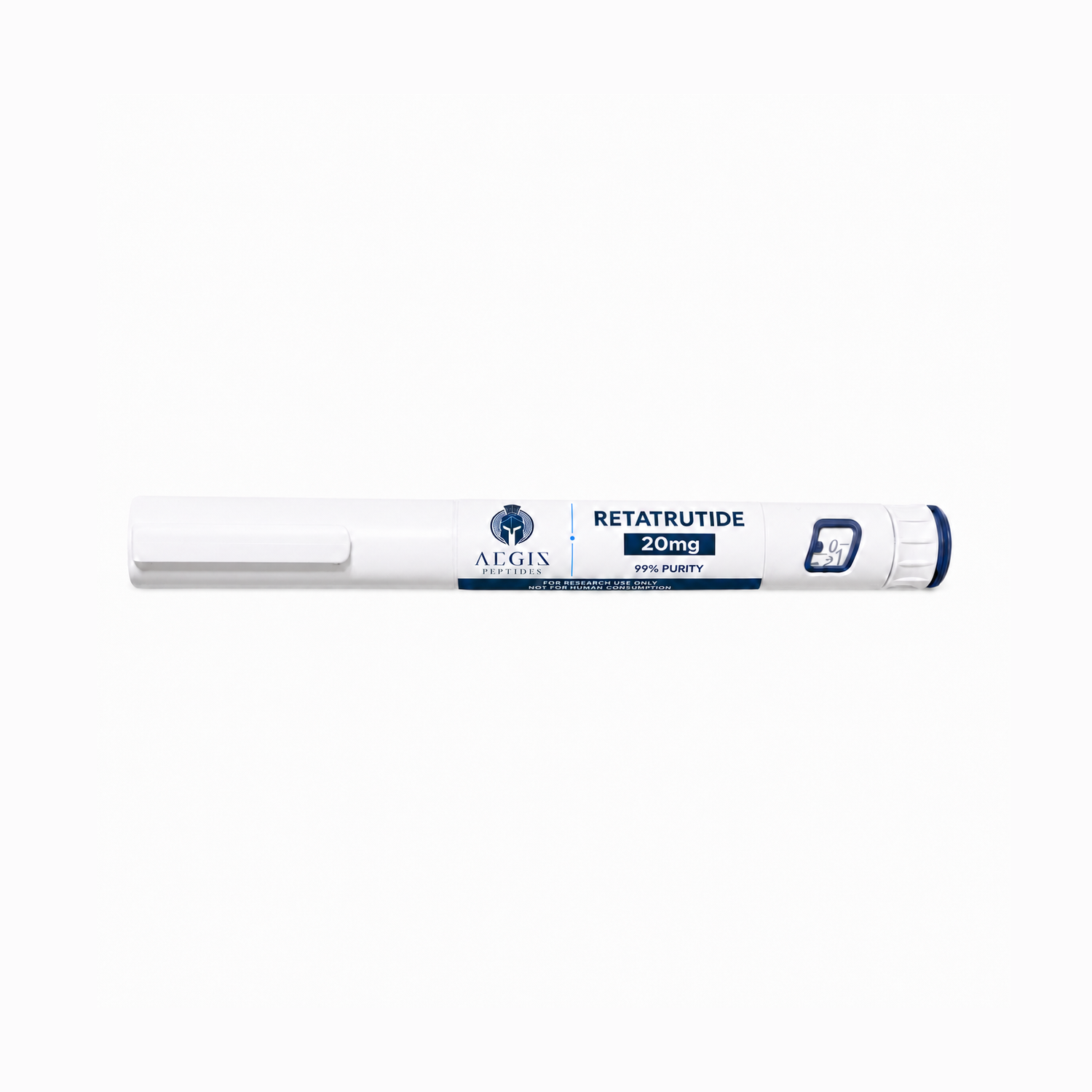
Retatrutide 20mg Pen
Retatrutide 40mg Pen
The word “pen” refers only to the listed research product format. It should not be interpreted as preparation guidance, administration guidance, injection guidance or personal-use instruction.
Product Documentation and Supplier COA
Aegis Peptides provides supporting product documentation where available, helping researchers and procurement buyers review product information before ordering.
A supplier COA can be reviewed here: View Supplier COA
Testing information and supplier documentation should be reviewed alongside the product details, intended research context and internal laboratory procurement requirements. Documentation may relate to a specific batch, so buyers should always check the current information available at the time of ordering.
Related Laboratory Products
For research buyers reviewing broader laboratory support products, Bacteriostatic Water is also available from Aegis Peptides.
Please ensure Bacteriostatic Water (BAC water) is ordered separately where reconstitution is required. Buyers should review each product page carefully and follow internal laboratory requirements.
Why Choose Aegis Peptides?
Aegis Peptides is a UK supplier of research peptides with a clear focus on responsible product presentation, supporting documentation and research-only supply.
Researchers and procurement buyers choose Aegis Peptides for:
- Clear product information
- Research-only positioning
- Supplier COA documentation where available
- Related Retatrutide product formats
- Free UK Tracked 24 delivery
- UK-focused online supply
- Straightforward product comparison
- Professional research-focused content
Aegis Peptides does not provide medical advice, dosing advice, preparation instructions, administration guidance, injection guidance, treatment advice or personal-use support.
Related Research Reading
Researchers reviewing Retatrutide side effects may also find these Aegis Peptides resources useful:
-
What is Retatrutide?
-
How Does Retatrutide Work?
-
Retatrutide 20mg Pen vs Retatrutide 40mg Pen
- Retatrutide
These pages provide research-led background and product-format context. They do not provide product-use, preparation, administration, dosing, injection, clinical or treatment guidance.
Strictly Research Use Only
All Retatrutide products offered by Aegis Peptides are strictly for laboratory and scientific research purposes only.
Retatrutide products are not intended for human consumption, veterinary use, self-administration, clinical use, treatment, diagnosis, prevention, cosmetic use, supplement use, body composition use, wellness use, weight-loss use or any form of personal use.
Customers must ensure that all products are handled responsibly within appropriate laboratory and scientific research environments.
FAQs
What are the most commonly reported Retatrutide side effects?
The most commonly reported Retatrutide side effects in research discussion are gastrointestinal, including nausea, diarrhoea, vomiting, constipation and abdominal discomfort.
Are Retatrutide side effects dose-related?
Some Retatrutide side effects are discussed as dose-related in study reporting, particularly gastrointestinal effects. This information is relevant to research context only and should not be treated as dosing guidance.
Can Retatrutide affect menstrual cycles?
Menstrual cycle changes are not well established as Retatrutide-specific trial-reported side effects. However, wider GLP-1 user discussions have included reports of menstrual irregularities such as changes to flow, duration, regularity, spotting or missed periods. Further research is needed.
Is Retatrutide approved for medical use?
Retatrutide is discussed as an investigational compound. Aegis Peptides does not supply Retatrutide as a medicine, prescription product, treatment product or personal-use product.
Does Aegis Peptides provide Retatrutide for personal use?
No. Aegis Peptides supplies Retatrutide products strictly for laboratory and scientific research purposes only.
Does Aegis Peptides provide advice on side effect management?
No. Aegis Peptides does not provide medical advice, side effect management advice, dosing guidance, preparation instructions, administration guidance, injection advice or personal-use support.
Where can researchers review Retatrutide products?
Researchers can review the Aegis Peptides Retatrutide collection, including Retatrutide 10mg, Retatrutide 20mg, Retatrutide 30mg, Retatrutide 40mg, Retatrutide 20mg Pen and Retatrutide 40mg Pen.
What should someone do if they experience side effects?
Anyone experiencing symptoms, side effects, menstrual changes, unusual bleeding, pregnancy concerns or health-related issues should speak to a qualified healthcare professional.