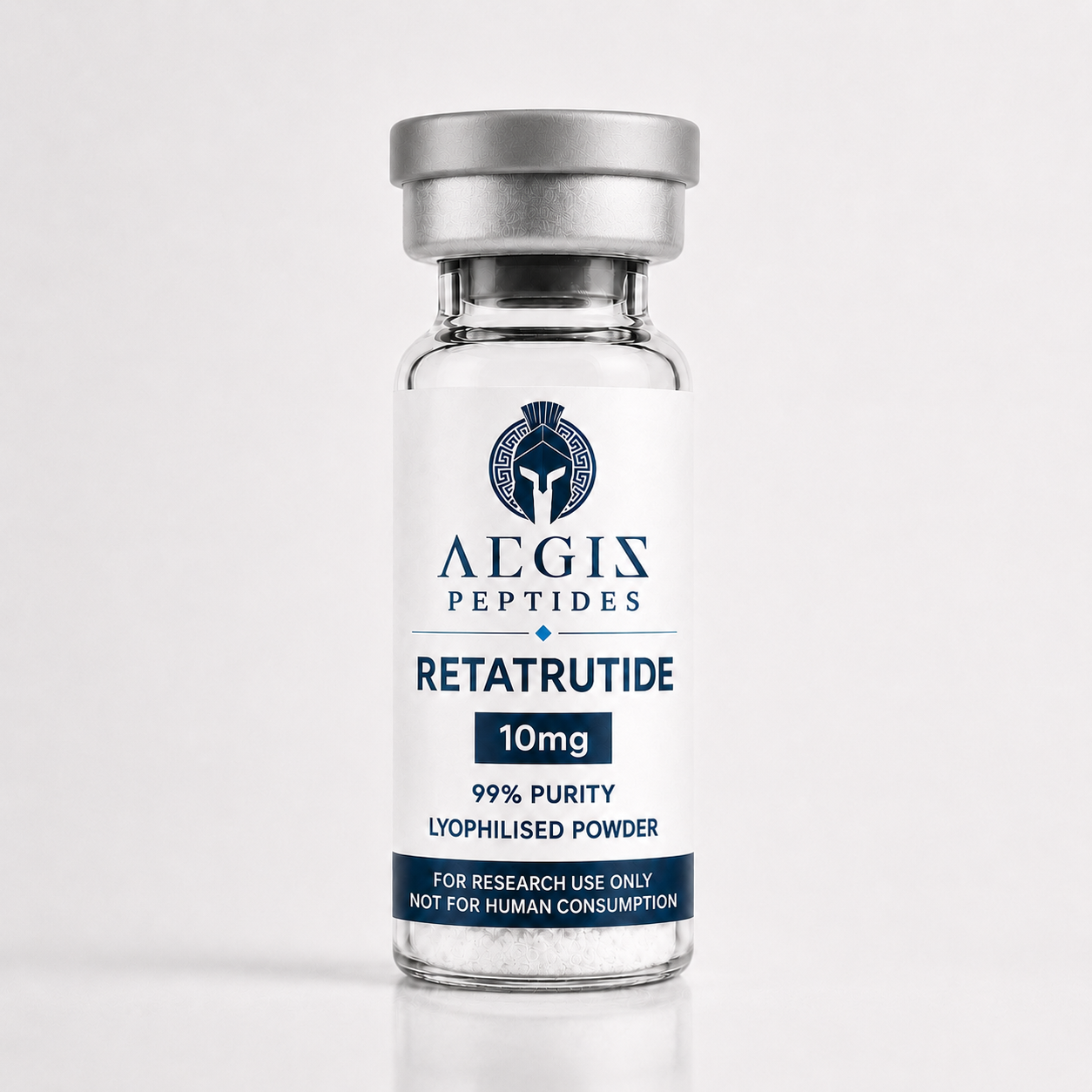
Side Effects of Retatrutide
Retatrutide has become one of the most widely searched peptide-based compounds in metabolic and pharmaceutical research. As interest grows, many people are searching for clear information about the side effects of Retatrutide, how it is being studied, and why responsible sourcing and research-only positioning matter.
Aegis Peptides is a UK supplier of research peptides. Our products are supplied strictly for laboratory research use only and are not intended for human consumption, clinical use, veterinary use, food use, cosmetic use or therapeutic use. This page is designed to provide educational, research-focused information about Retatrutide side effects as reported in clinical and scientific research contexts. It is not medical advice and should not be used as guidance for personal use.
What Is Retatrutide?
Retatrutide is an investigational peptide-based compound that has been studied in relation to metabolic research. It is often described in scientific literature as a triple hormone receptor agonist because it acts on GLP-1, GIP and glucagon receptor pathways.
These pathways are of interest to researchers because they are connected to metabolic signalling, appetite-related mechanisms, glucose regulation and energy balance. However, research interest does not mean that Retatrutide should be used personally or purchased for self-administration.
Retatrutide and Research-Only Supply
Retatrutide supplied as a research peptide should be treated as a laboratory research material only. It should not be marketed as a medicine, weight-loss product, supplement, cosmetic ingredient or personal-use treatment.
At Aegis Peptides, all research peptides are supplied for laboratory research use only. We do not provide medical advice, dosage guidance, administration instructions or personal-use recommendations.
Side Effects of Retatrutide: What Does Research Suggest?
The side effects of Retatrutide reported in clinical research are most commonly gastrointestinal in nature. These side effects have generally been described as dose-related and often associated with the dose-escalation stage in study settings.
Because Retatrutide remains an investigational compound in many contexts, research into its long-term safety profile is still developing. Anyone looking for personal medical advice should speak to a qualified healthcare professional.
Common Side Effects of Retatrutide Reported in Research
Published research and trial discussions have commonly reported gastrointestinal side effects as the most frequent adverse events associated with Retatrutide.
Nausea
Nausea is one of the most commonly discussed side effects of Retatrutide in clinical research. It has been reported more frequently in Retatrutide groups than placebo groups in study settings, particularly at higher dose levels.
From a research perspective, nausea is often discussed alongside other gastrointestinal responses connected to incretin-based compounds.
Diarrhoea
Diarrhoea has also been reported among the side effects of Retatrutide. In research settings, gastrointestinal events such as diarrhoea may be monitored closely because they can affect tolerability and study continuation.
Vomiting
Vomiting has been reported in Retatrutide research, particularly within gastrointestinal adverse event categories. Researchers often consider vomiting alongside nausea and diarrhoea when assessing tolerability.
Constipation
Constipation is another gastrointestinal side effect that has been reported in research involving Retatrutide and similar incretin-based pathways. It may be included in adverse event monitoring during clinical study analysis.
Reduced Appetite
Reduced appetite may be discussed in Retatrutide research because of the compound’s relationship with metabolic and appetite-related signalling pathways. However, this should not be interpreted as a consumer claim or personal-use recommendation.
Abdominal Discomfort
Some studies and discussions around incretin-based compounds include abdominal discomfort, bloating or digestive disturbance as part of gastrointestinal adverse event monitoring.
Acid Reflux
Acid reflux, heartburn or indigestion may also be discussed as minor gastrointestinal side effects in relation to incretin-based compounds and Retatrutide research. Because Retatrutide has been associated with gastrointestinal adverse events in study settings, researchers may monitor symptoms such as reflux, upper abdominal discomfort or digestive irritation as part of broader tolerability assessment.
Skin Sensitivity
Skin sensitivity, altered skin sensation or increased sensitivity to touch has also been mentioned in recent discussions around Retatrutide side effects. These symptoms may be described as sensory changes and should be interpreted carefully within the context of controlled clinical research. As with other reported side effects, this information should not be treated as personal-use guidance or medical advice.
Other Side Effects of Retatrutide Discussed in Research
Although gastrointestinal effects are the most commonly discussed side effects of Retatrutide, research has also examined other safety observations.
Increased Heart Rate
Dose-dependent increases in heart rate have been reported in Retatrutide research. This is an important area of monitoring in clinical study settings, especially when evaluating the safety profile of metabolic compounds.
Sensory Symptoms
Recent trial discussions have mentioned sensory symptoms such as altered skin sensations in some participants. These observations require careful interpretation and continued research.
Treatment Discontinuation
Some participants in Retatrutide studies have discontinued because of adverse events. Discontinuation rates can vary depending on dose, study design, participant group and trial conditions.
Serious Adverse Events
Serious adverse events have been reported in some Retatrutide research settings. This is one reason why investigational compounds must be studied under controlled clinical conditions and should not be used outside appropriate medical or research frameworks.
Why the Side Effects of Retatrutide Need Careful Interpretation
When people search for the side effects of Retatrutide, it is important to understand that clinical trial data does not translate into safe personal use. Trial participants are monitored by qualified professionals under controlled study protocols.
Research conditions may include:
Medical Screening
Clinical trials usually involve eligibility checks before participants are enrolled.
Controlled Dosing Protocols
Doses and escalation schedules are determined by trial design and medical oversight.
Safety Monitoring
Participants are monitored for adverse events, tolerability and changes in health markers.
Reporting Procedures
Clinical trials have structured processes for recording and reviewing side effects.
These safeguards are very different from unsupervised personal use. Research peptides should never be used as substitutes for licensed medicines or medical care.
Side Effects of Retatrutide vs Similar Peptide-Based Compounds
Retatrutide is often discussed alongside other peptide-based compounds such as Semaglutide and Tirzepatide because they are connected to incretin-related pathways. However, each compound has its own structure, receptor profile, trial history and safety considerations.
GLP-1 Related Effects
Gastrointestinal side effects are commonly discussed across GLP-1-related research. These can include nausea, vomiting, diarrhoea and constipation.
Multi-Receptor Activity
Retatrutide is often described as acting on GLP-1, GIP and glucagon receptor pathways. Because of this triple activity, its safety profile needs to be studied specifically rather than assumed based on other compounds.
Research Comparisons Require Caution
Comparing Retatrutide with other compounds should be done carefully. Differences in dose, formulation, study population, duration and trial design can affect side-effect reporting.
Why Retatrutide Should Not Be Used Without Medical Oversight
Retatrutide is not a product that should be purchased for personal experimentation. Side effects of Retatrutide can involve gastrointestinal symptoms, heart-rate changes and other adverse events that require proper clinical monitoring.
People struggling with weight, metabolic health or any medical concern should speak to a qualified healthcare professional. They should not buy research peptides online for personal use.
Research Peptides Are Not Medicines
Research peptides supplied by Aegis Peptides are not licensed medicines. They are not sold for treating, preventing, diagnosing or managing any medical condition.
No Dosage Guidance Is Provided
Aegis Peptides does not provide dosage guidance, injection instructions, treatment advice or personal-use protocols.
Healthcare Advice Should Come From Professionals
Only qualified healthcare professionals can assess a person’s medical needs, prescribe suitable treatments where appropriate, and monitor safety.
What UK Buyers Should Know Before Searching for Retatrutide Online
Search interest in Retatrutide has increased significantly, but online information can be misleading. Some websites may use medical claims, transformation language or personal-use instructions that are not appropriate for research peptide supply.
Avoid Websites That Promote Human Use
Be cautious of websites that describe Retatrutide as a personal weight-loss product or offer instructions for self-administration.
Avoid Dosage Guides
Dosage guidance is not appropriate for research-only peptide suppliers. It may indicate that a website is encouraging personal use.
Avoid Medical Claims
A supplier should not claim that Retatrutide treats, prevents or manages any medical condition.
Avoid Before-and-After Marketing
Before-and-after content can imply consumer outcomes and is not suitable for research peptide positioning.
Responsible Research-Only Information About Retatrutide
A responsible UK peptide supplier should focus on research-only product information, not consumer health claims. This means content should be centred on scientific context, documentation, storage, product labelling and responsible sourcing.
Appropriate Research-Focused Information May Include:
Product name
Research-use-only status
Purity information
Batch traceability
Certificate of Analysis availability
Storage guidance
Molecular and analytical context
Clear labelling
Responsible disclaimers
Inappropriate Content May Include:
Weight-loss promises
Medical claims
Dosage instructions
Injection guidance
Personal-use recommendations
Fitness or body-enhancement claims
Anti-ageing claims
Treatment claims
Aegis Peptides: UK Supplier of Research Peptides
Aegis Peptides is a UK supplier of research peptides, supporting research-focused buyers with clear product information and responsible research-only supply.
Our products are supplied strictly for laboratory research and are not intended for human consumption, clinical use, veterinary use, food use, cosmetic use or therapeutic use.
Research-Only Peptide Supply
Aegis Peptides supplies research peptides for laboratory use only. We do not market products for personal use, weight loss, medical treatment or cosmetic outcomes.
Clear Product Information
We aim to provide clear product information so research buyers can assess products responsibly.
UK-Based Supplier
As a UK-based peptide supplier, Aegis Peptides offers a domestic option for research-focused buyers.
Free UK Delivery
Aegis Peptides offers free UK delivery, helping UK buyers order research peptides without additional UK delivery charges at checkout.
Frequently Asked Questions About the Side Effects of Retatrutide
What are the most common side effects of Retatrutide?
The most commonly reported side effects of Retatrutide in research settings are gastrointestinal events, including nausea, diarrhoea, vomiting and constipation.
Is Retatrutide safe to use?
Aegis Peptides does not provide medical advice or personal-use guidance. Retatrutide should not be used outside appropriate medical or research frameworks. Anyone with health concerns should speak to a qualified healthcare professional.
Can Retatrutide be used for weight loss?
Research peptides supplied by Aegis Peptides are not intended for weight loss, human consumption, self-administration or therapeutic use. People seeking weight-management support should speak to a qualified healthcare professional.
Does Retatrutide affect heart rate?
Dose-dependent increases in heart rate have been reported in Retatrutide research. This is one reason why investigational compounds require controlled study conditions and professional monitoring.
Are Retatrutide side effects dose-related?
Research has described gastrointestinal adverse events as dose-related in some study settings. However, this should not be interpreted as dosage guidance or personal-use advice.
Can Aegis Peptides advise on Retatrutide side effects?
No. Aegis Peptides does not provide medical advice. This page is for general educational and research-focused information only.
Is Retatrutide a medicine?
Retatrutide is an investigational peptide-based compound discussed in clinical and pharmaceutical research. Research peptides supplied by Aegis Peptides are not licensed medicines and are supplied strictly for laboratory research only.
Final Thoughts on the Side Effects of Retatrutide
The side effects of Retatrutide most commonly discussed in research are gastrointestinal, including nausea, diarrhoea, vomiting and constipation. Other observations, such as heart-rate changes and treatment discontinuation, have also been reported in clinical research settings.
However, clinical research data should not be treated as personal-use guidance. Retatrutide should not be purchased or used for self-administration, weight loss or medical purposes outside appropriate professional oversight.
Aegis Peptides is a UK supplier of research peptides, offering research-only products with clear information and free UK delivery. Our focus is responsible research supply, not medical advice, dosage guidance or consumer-use marketing.