Peptides Studied in Fat Loss and Metabolic Research in the UK
At Aegis Peptides, we supply high-purity, third-party tested research peptides for laboratory and scientific investigation across the UK. As research interest continues to grow around metabolic signalling, appetite-related pathways, glucose response and energy balance models, several peptide compounds have become widely discussed within fat loss and obesity-related research.
This guide explores peptides commonly studied in controlled laboratory environments for their relationship with metabolic regulation, receptor pathway activity and weight-regulation research models. References to fat loss, body composition, appetite regulation or weight-related pathways are included only in relation to scientific research topics and published study areas.
All products supplied by Aegis Peptides are strictly for laboratory and scientific research purposes only. They are not intended for human consumption, veterinary use, self-administration, clinical use, diagnosis, treatment, prevention, cosmetic use, supplement use, body composition use, wellness use, weight-loss use or personal use.
What Are Metabolic Research Peptides?
Metabolic research peptides are synthetic or peptide-based compounds studied for their interaction with biological pathways linked to energy balance, appetite-related signalling, glucose response and receptor activity. In laboratory and scientific research, these compounds may be reviewed in relation to mechanisms involving:
- Appetite-related signalling
- Energy metabolism
- Glucose regulation
- Hormone receptor activity
- Insulin response models
- Gastric emptying pathways
- Cellular energy expenditure
- Cardiometabolic research frameworks
Many modern metabolic peptide research programmes focus on receptor pathways that are involved in hunger signalling, glucose response and energy balance. The most widely discussed pathways include GLP-1, GIP and glucagon receptor activity.
Researchers studying these pathways may also review the wider Retatrutide category, as Retatrutide is one of the most discussed research compounds in this area.
Key Pathways Studied in Fat Loss and Metabolic Research
GLP-1 Pathway Research
GLP-1, or glucagon-like peptide-1, is widely studied in metabolic and endocrine research. It is often reviewed in relation to appetite-related signalling, gastric emptying pathways, glucose response and insulin-related research models.
GIP Pathway Research
GIP, or glucose-dependent insulinotropic polypeptide, is another pathway of interest in metabolic research. Researchers may study GIP receptor activity when reviewing glucose response, insulin signalling and wider metabolic pathway interaction.
Glucagon Receptor Research
Glucagon receptor activity is studied in relation to energy expenditure, glucose regulation and metabolic signalling. Compounds that involve glucagon receptor research may be reviewed in energy balance models and obesity-related research frameworks.
For a more detailed explanation of Retatrutide’s relationship with these pathways, researchers can review How Does Retatrutide Work?.
Peptides Commonly Studied in Metabolic and Fat Loss Research
Several peptides are frequently discussed in metabolic research because of their interaction with GLP-1, GIP and related signalling pathways. The compounds below are included for research context only and should not be interpreted as recommendations, treatment advice or personal-use guidance.
| Compound | Main Research Pathways | Common Research Interest |
|---|---|---|
| Retatrutide | GLP-1, GIP and glucagon | Metabolic signalling, energy balance, appetite-related pathway research |
| Tirzepatide | GLP-1 and GIP | Glucose response, satiety signalling, dual receptor pathway research |
| Semaglutide | GLP-1 | Appetite-related signalling, gastric emptying and glucose response research |
Retatrutide Research
Retatrutide, sometimes referred to as Reta in research discussions, is one of the most widely discussed compounds in modern metabolic peptide research. It is studied because of its relationship with GLP-1, GIP and glucagon receptor pathways.
This triple pathway interest makes Retatrutide relevant to research involving receptor pathway comparison, appetite-related signalling, energy balance models, glucose response and cardiometabolic research frameworks.
Researchers looking for a broader introduction can review What is Retatrutide?, which explains the compound from a research-led perspective.
Why Retatrutide Receives Research Attention
Retatrutide has become a major subject in metabolic science because it is studied in relation to three receptor pathways rather than one. This makes it relevant to researchers comparing single, dual and triple receptor activity within obesity-related and metabolic research models.
Research interest often focuses on:
- GLP-1 receptor pathway activity
- GIP receptor pathway activity
- Glucagon receptor pathway activity
- Metabolic signalling models
- Energy balance research
- Appetite-related pathway studies
- Glucose response models
- Cardiometabolic research frameworks
Aegis Peptides supplies Retatrutide research products in several formats, including Retatrutide 10mg, Retatrutide 20mg, Retatrutide 30mg and Retatrutide 40mg.
Retatrutide Product Formats from Aegis Peptides
Aegis Peptides provides Retatrutide research products for laboratories, research organisations and procurement buyers reviewing product formats for controlled research environments.
The Retatrutide range includes individual research peptide vials and research pen-format products. Product selection should be based on internal laboratory requirements, documentation review, research governance and procurement processes.
Retatrutide Vials
Retatrutide vial products may be reviewed by buyers comparing contained amounts, product presentation, documentation and procurement requirements. Aegis Peptides supplies:
These products are supplied as individual research peptide product vials. They are not supplied for personal use, clinical use, treatment, diagnosis, wellness use, body composition use or weight-loss use.
Retatrutide Pen Formats
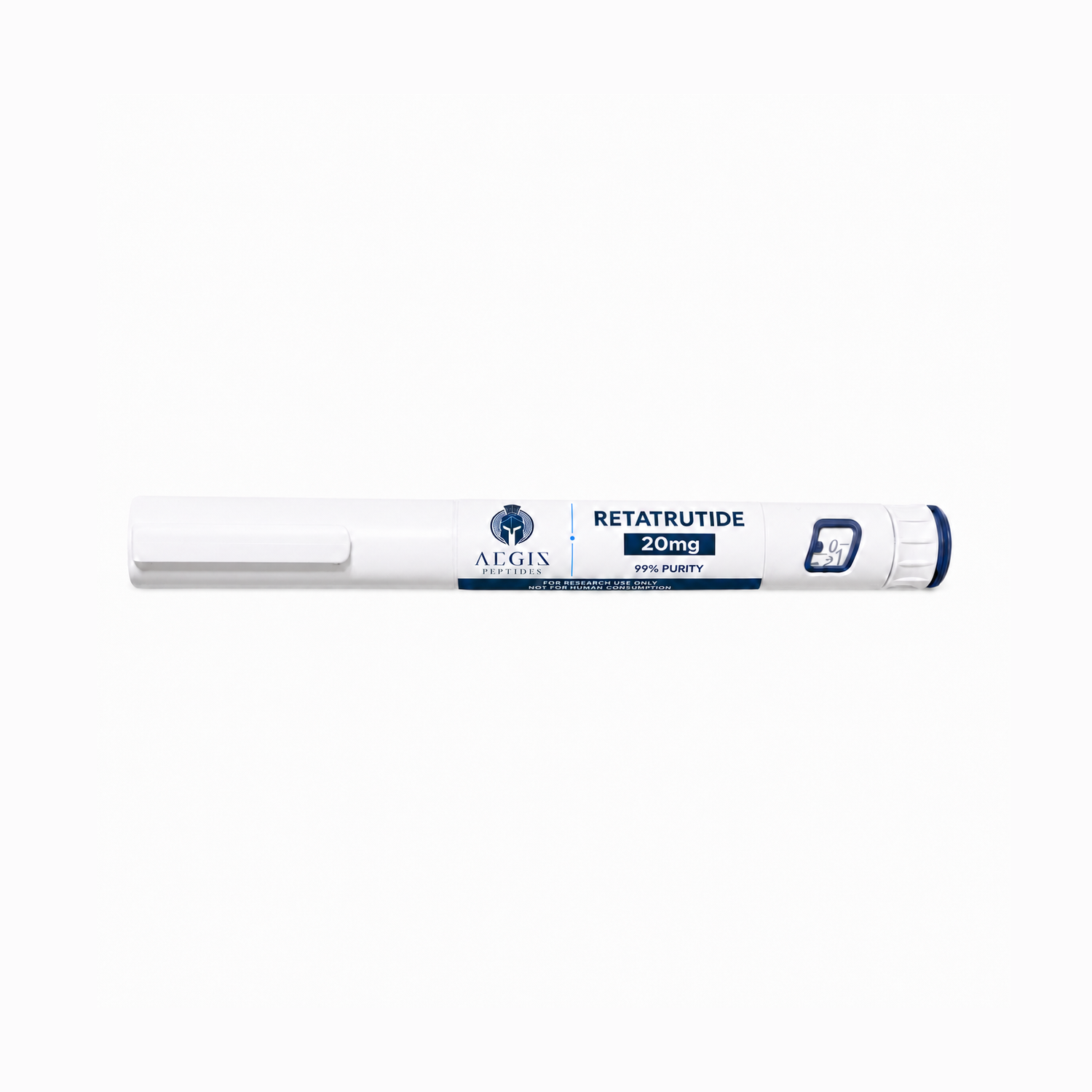
Aegis Peptides also supplies research pen-format products, including Retatrutide 20mg Pen and Retatrutide 40mg Pen.
The word “pen” refers only to the listed research product format. It should not be interpreted as preparation guidance, administration guidance, injection guidance, dosing advice or personal-use instruction.
Researchers comparing these formats may find Retatrutide 20mg Pen vs Retatrutide 40mg Pen useful for understanding the difference from a research procurement perspective.
Retatrutide Research Format Comparison
The table below provides a simple overview of the Retatrutide formats available from Aegis Peptides.
| Product | Format | Research Category |
| Retatrutide 10mg | Individual research vial | Retatrutide research peptide |
| Retatrutide 20mg | Individual research vial | Retatrutide research peptide |
| Retatrutide 30mg | Individual research vial | Retatrutide research peptide |
| Retatrutide 40mg | Individual research vial | Retatrutide research peptide |
| Retatrutide 20mg Pen | Research pen format | Retatrutide research product format |
| Retatrutide 40mg Pen | Research pen format | Retatrutide research product format |
For full category review, researchers and procurement buyers can browse the Retatrutide collection.
Retatrutide Side Effects in Research Context
Retatrutide side effects are a common research topic because clinical and metabolic studies often include adverse event monitoring as part of their design. Discussions around tolerability, gastrointestinal effects, dose-related responses and safety monitoring belong within controlled research and clinical study environments.
Aegis Peptides does not provide medical advice or personal-use guidance. Anyone looking for health, treatment, medication or side-effect advice should speak to a qualified healthcare professional.
For research-led background, see Retatrutide Side Effects.
Tirzepatide Research
Tirzepatide is another widely studied metabolic peptide compound. It is commonly discussed in relation to dual receptor activity involving GLP-1 and GIP receptor pathways.
Researchers may review Tirzepatide in relation to:
- Hormone signalling
- Glucose response models
- Satiety pathway research
- Dual receptor metabolic activity
- Cardiometabolic research frameworks
For further reading, researchers may want to read our article on Retatrutide vs Tirzepatide.
Tirzepatide is included here for research comparison only. Aegis Peptides does not present any peptide compound as a medicine, treatment product, weight-loss product or personal-use product.
Semaglutide Research
Semaglutide is one of the best-known GLP-1 receptor agonists discussed in obesity and metabolic research literature. It is commonly studied in relation to GLP-1 receptor activity, appetite-related signalling, gastric emptying pathways and glucose response models.
Research interest in Semaglutide has helped shape wider scientific discussion around GLP-1 pathways and metabolic signalling. It also provides a comparison point for researchers reviewing dual and triple receptor compounds such as Tirzepatide and Retatrutide.
For more information about Semaglutide, see our article on Semaglutide vs Retatrutide.
How Metabolic Peptides Are Studied in Research
Researchers may study metabolic peptides across several biological systems, depending on the compound, receptor pathway and research objective.
Appetite-Related Signalling
Some peptides are studied for their interaction with satiety and hunger-related signalling pathways. These studies may examine receptor activity and biological responses in controlled research models.
Glucose Response Models
GLP-1 and GIP pathway research often focuses on glucose regulation, insulin response and metabolic signalling. These areas are commonly reviewed in endocrine and cardiometabolic research.
Energy Balance Research
Compounds involving glucagon receptor activity may be reviewed in energy expenditure and energy balance models. This is one reason Retatrutide is often discussed in comparison with earlier GLP-1 pathway compounds.
Gastric Emptying Pathways
Some metabolic peptides are studied for their relationship with digestion speed, nutrient absorption signalling and gastric emptying mechanisms.
For further background, researchers can read How does Retatrutide work?, which provides more detail on Retatrutide pathway interest.
Why Researchers Choose Aegis Peptides
Aegis Peptides is a UK supplier of research peptides with a focus on product transparency, supporting documentation and responsible research-only supply. Our product information is written for researchers, laboratories, research organisations and procurement buyers, not for consumer medical or personal-use purposes.
Researchers choose Aegis Peptides for:
- High-purity research peptide products
- Third-party testing where available
- Supplier COA documentation
- Transparent product information
- Clear research-only positioning
- Free UK Tracked 24 delivery
- UK-focused fulfilment
- Related Retatrutide vial and pen formats
A supplier COA is available for Retatrutide products and can be reviewed here:
Understanding Lyophilised Research Peptides
Many research peptides are supplied in lyophilised, or freeze-dried, form to support product stability during storage and transport. Lyophilisation may help reduce degradation risk and support consistency before laboratory review or preparation within controlled research environments.
Where reconstitution is required for laboratory research procedures, Bacteriostatic Water should be ordered separately and reviewed according to its own product information and internal laboratory requirements.
Aegis Peptides does not provide preparation, administration, injection, dosing or personal-use guidance.
Related Research Reading
Researchers reviewing metabolic research peptides may also find these Aegis Peptides resources useful:
-
What is Retatrutide?
-
How Does Retatrutide Work?
-
Retatrutide Side Effects
-
Retatrutide 20mg Pen vs Retatrutide 40mg Pen
- Retatrutide
These pages provide research-led background, product-format comparison and supporting information for buyers reviewing Retatrutide and related metabolic pathway research topics.
Frequently Asked Questions
What peptides are studied in fat loss and metabolic research?
Retatrutide, Tirzepatide and Semaglutide are frequently discussed in metabolic and obesity-related research because of their relationship with GLP-1, GIP and glucagon receptor pathways. This does not mean they are supplied for personal weight-loss use.
Why is Retatrutide studied in metabolic research?
Retatrutide is studied because it is associated with GLP-1, GIP and glucagon receptor pathways. This triple pathway interest makes it relevant to research involving metabolic signalling, appetite-related pathways, glucose response and energy balance models.
What Retatrutide products does Aegis Peptides supply?
Aegis Peptides supplies Retatrutide research products including Retatrutide 10mg, Retatrutide 20mg, Retatrutide 30mg, Retatrutide 40mg, Retatrutide 20mg Pen and Retatrutide 40mg Pen.
Are Aegis Peptides products supplied with COAs?
Supplier COA documentation is available for Retatrutide products. Researchers should review the current COA and available testing information before ordering.
Are these peptides for human use?
No. Products supplied by Aegis Peptides are strictly for laboratory and scientific research purposes only. They are not intended for human consumption, veterinary use, self-administration, clinical use, treatment, diagnosis, prevention, cosmetic use, supplement use, body composition use, wellness use, weight-loss use or personal use.
Does Aegis Peptides provide dosing or preparation guidance?
No. Aegis Peptides does not provide dosing, preparation, administration, injection, treatment, clinical-use or personal-use guidance.
Does Aegis Peptides offer UK delivery?
Yes. Aegis Peptides offers free UK Tracked 24 delivery on UK orders, helping research buyers receive products securely with tracked delivery information.
Shop Research Peptides UK
Aegis Peptides supplies research peptides to laboratories, research organisations and procurement buyers across the UK. Whether reviewing GLP-1 pathway research, Retatrutide formats, metabolic signalling studies or multi-receptor compounds, buyers can review product information, supplier documentation and related research resources before ordering.
Browse available Retatrutide research products through the Aegis Peptides website and review all product details, testing information, COA documentation and delivery terms before placing an order.
Important Legal Notice
All products sold by Aegis Peptides are intended strictly for in vitro laboratory research purposes only. They are not:
- Approved for human consumption
- Intended for medical treatment
- Intended for diagnostic use
- Intended for veterinary application
- Intended for cosmetic, supplement, wellness, body composition, weight-loss or personal use
By purchasing from Aegis Peptides, the buyer confirms they are a qualified researcher, laboratory, research organisation or authorised institution operating in compliance with all applicable laws, regulations and laboratory safety standards.